Why Version Control Exists: The Pendrive Problem
Before Git, GitHub, and modern version control systems existed, developers still wrote code, built software, and worked in teams. But the way they managed code versions was messy, risky, and inefficient. One of the most common tools used was something very simple: the pendrive.
This article explains why version control exists, using the pendrive analogy to show the real problems developers faced before version control systems became standard.
The Pendrive Analogy in Software Development
Imagine a team of developers working on the same project.
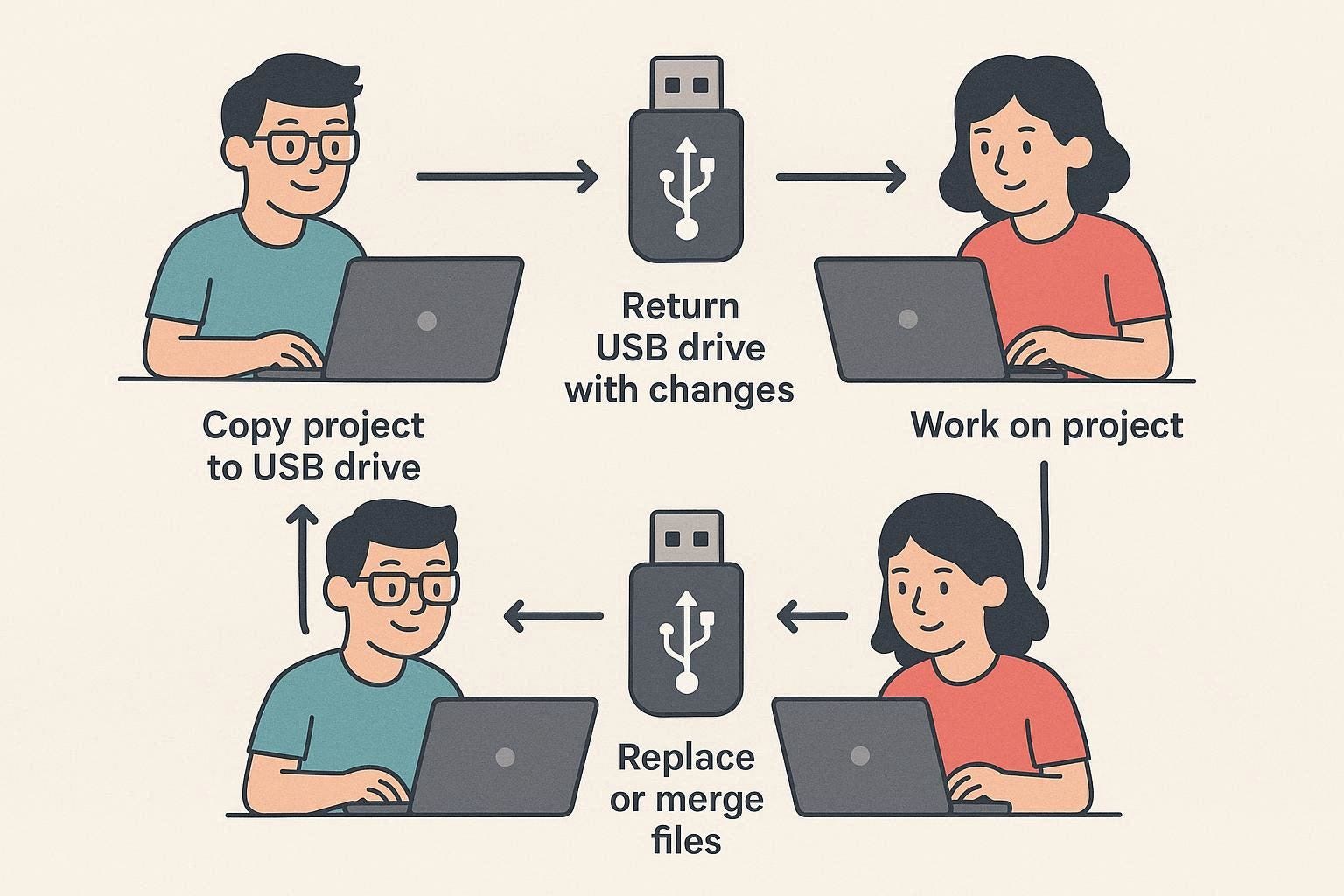
There is one pendrive that contains the project code.
How the Workflow Looked
Developer A takes the pendrive home and makes changes.
The next day, Developer B takes the same pendrive and edits the code.
Developer C also needs the code, so someone emails a zip file.
Multiple copies of the same project start existing in different places.
To avoid losing work, developers created folders like:
project_finalproject_final_v2project_latestproject_latest_final_really
Everyone believed their version was the correct one.
Problems Faced Before Version Control Systems
1. Overwriting Code
If two developers modified the same file, the last person to copy their code usually overwrote the other person's work. There was no safe way to merge changes.
2. Losing Changes
Pendrives got corrupted. Emails were outdated. Sometimes a file was accidentally deleted. Once lost, the code was gone forever.
3. No History of Changes
There was no clear answer to questions like:
Who changed this code?
When was this bug introduced?
What was the last working version?
If something broke, developers had to guess or manually search old folders.
4. No Real Collaboration
Only one person could safely work on the project at a time. Parallel development was almost impossible without conflicts.
5. Confusing Version Names
Folders like final_v3_fixed_bug_new became common, but they did not truly solve the problem. They only added confusion.
Why Version Control Became Mandatory
Version control systems were created to solve all these problems.
They introduced:
A single source of truth for the code
Complete history of every change
Safe collaboration for multiple developers
Easy rollback to previous working versions
Structured workflows instead of chaos
Instead of passing pendrives, developers could now clone repositories, create branches, and merge changes safely.
Real-World Team Collaboration Problems
As software teams grew larger and projects became more complex, the pendrive approach completely failed.
Teams worked from different locations
Multiple features were developed at the same time
Bugs needed fast fixes without breaking existing code
The pendrive model could not support speed, teamwork, or reliability.
From Pendrives to Git
Git replaced:
Pendrives → repositories
Email attachments → commits
final_v2folders → version historyNo history → History


